
Blog
10 Hurricane Repair Unpermitted Florida Fixes for 2026
Repaired hurricane damage without a permit in Florida? Learn 10 practical fixes, from after-the-fact permits to the 50% flood rule, for 2026.
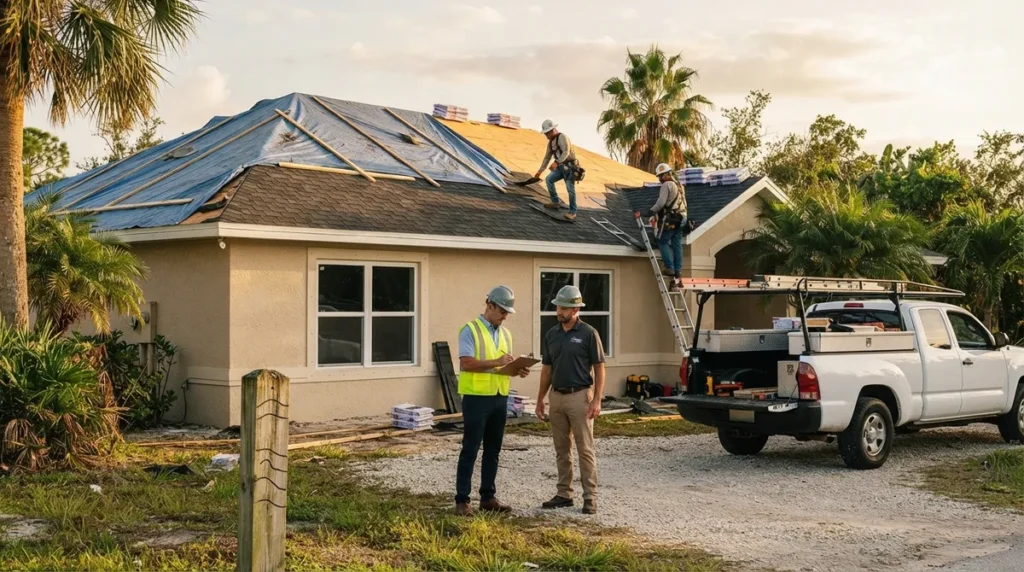
Key Takeaways
-
Confirm whether your hurricane repair actually needed a permit: roofing, structural, impact windows/doors, and electrical, plumbing, or mechanical work usually do, while temporary tarps and minor cosmetic patching often don't.
-
Identify the correct authority having jurisdiction first, since a city mailing address may sit in unincorporated county territory and the wrong office can cost weeks.
-
If you are in a flood hazard area, repair costs at or above 50% of the structure's pre-event improved value can trigger current elevation standards, so check your county's floodplain guidance.
-
Verify your contractor's license on the state database, since a permit alone does not prove the contractor was properly licensed and unlicensed work may require a licensed contractor to take responsibility.
-
Address penalties early: Florida Statutes allow civil penalties up to $2,500 per day per violation and administrative fines up to $10,000 for unlicensed contracting, so voluntarily coming forward is usually calmer than waiting for a complaint.
-
Gather photos, invoices, product approvals, and insurance paperwork, and prepare for inspections that may require exposing covered work, since unpermitted repairs can affect insurance claims, home sales, and financing.
If you rushed to patch your home after a hurricane and never pulled a permit, take a breath. You are far from alone, and there is usually a path forward. After every major storm, Florida crews work fast, owners want their lives back, and paperwork gets skipped. Then months later, a lender, buyer, insurer, or inspector asks a simple question: where is the permit?
The good news is that unpermitted hurricane repair in Florida is often fixable through an after-the-fact permit process. The not-so-good news is that the rules vary by county, by city, by repair scope, and even by flood zone. A few ground rules apply nearly everywhere, though, and knowing them early can save you real money and stress.
In this friendly guide, we walk through ten practical fixes and facts for 2026, from figuring out which building department actually controls your property to understanding the 50% flood rule. Whether you are a homeowner, a general contractor, a roofer, a solar installer, or a real estate pro, you will find steps you can use today. Let's get your storm repairs back on solid legal ground.
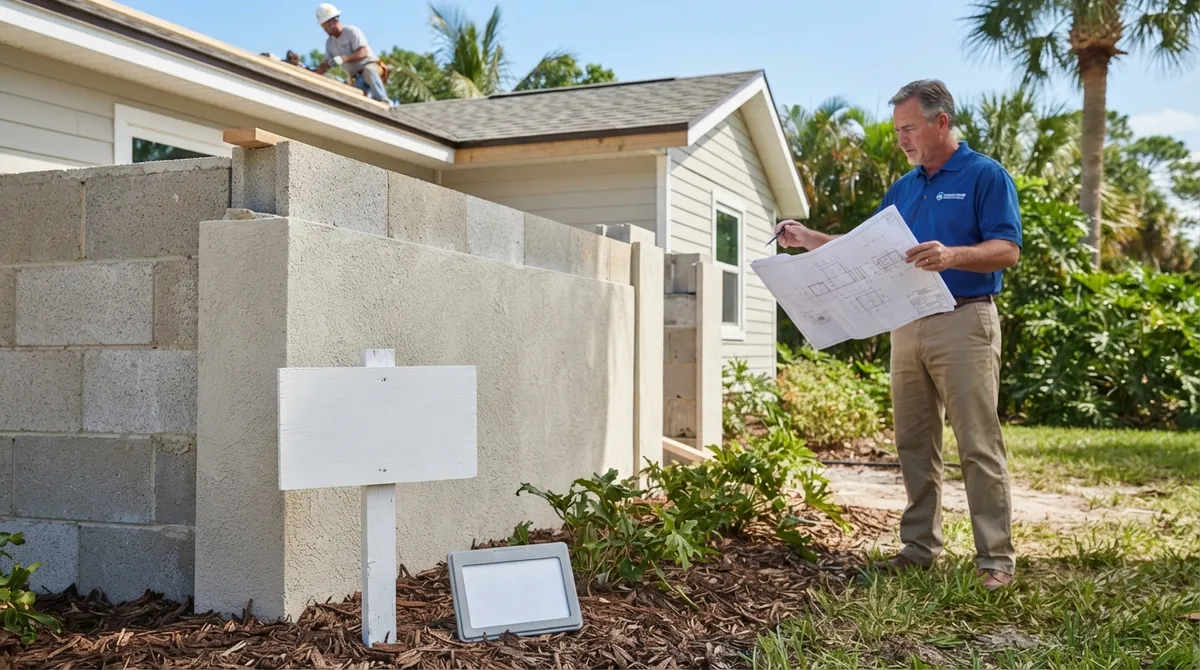
1. Confirm Whether Your Hurricane Repair Needed a Permit
Before you panic, make sure a permit was actually required. Florida law generally requires a permit before anyone builds, alters, repairs, or demolishes a building. Florida Statutes §553.79 is the central statewide provision, but local rules and exemptions matter too, and the local enforcing agency decides what documentation applies.
Many common storm repairs do require permits. Orange County, for example, lists roof, structural, window and door, electrical, plumbing, mechanical, and many accessory-structure repairs as permit-required. Temporary tarps and certain minor tasks may be exempt.
Here is a quick look at how repair types commonly sort out. Always confirm with your local building department before assuming an exemption applies.
| Hurricane Repair Type | Permit Usually Needed? | Notes |
|---|---|---|
| Roof replacement or structural roof repair | Yes | Often requires inspections and product approvals |
| Impact window or door replacement | Yes | Product approval documentation typically required |
| Electrical, plumbing, or mechanical repair | Yes | Licensed trade contractors usually required |
| Structural framing or wall repair | Yes | May need engineering |
| Temporary roof tarp | Often no | Local rules vary |
| Minor cosmetic patching | Often no | Depends on scope and jurisdiction |
If you are unsure, our building department lookup tool is a handy place to start.
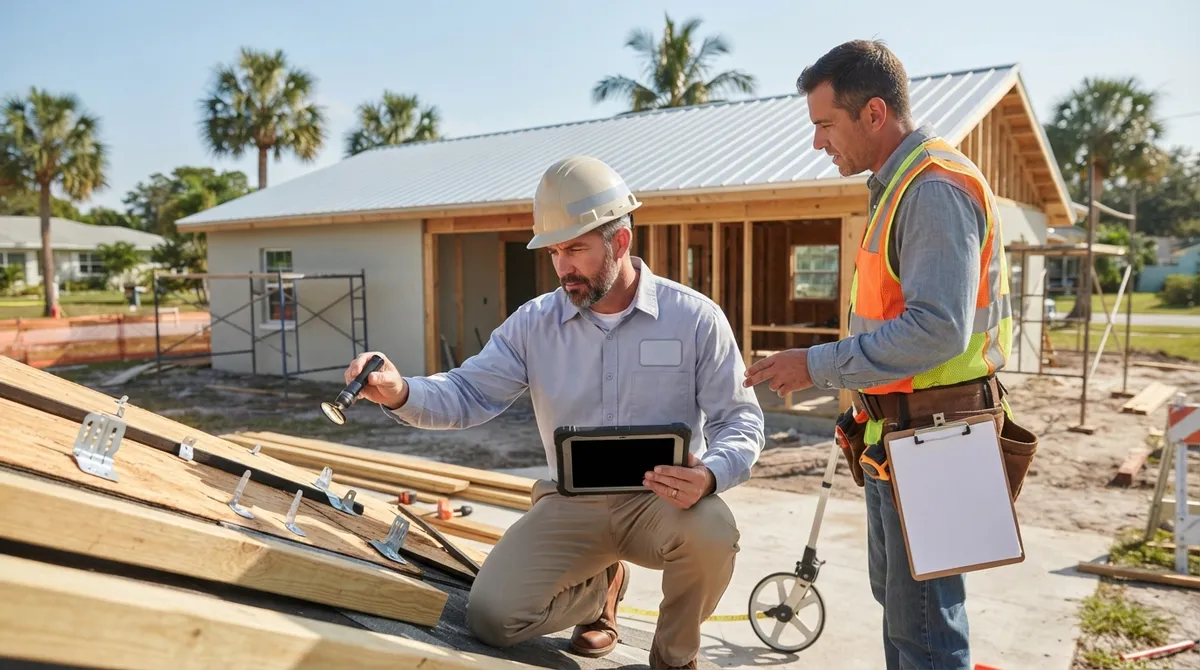
2. Identify the Authority Having Jurisdiction
One of the most common surprises we see is that owners call the wrong office. A property with a city mailing address may actually sit in unincorporated county territory, or the other way around. That matters because the authority having jurisdiction decides your permit requirements, fees, and timelines.
Pinellas County, for instance, applies its after-the-fact storm permitting guidance only in specified unincorporated areas and named municipalities where the county serves as building official. It is not a statewide rule. Learn more about how Florida jurisdictions are determined before you file anything.
A quick checklist for finding your jurisdiction:
- Check your property tax record for the jurisdiction listed
- Call the county building department and ask who reviews your parcel
- Confirm whether a municipality, county, or special district handles your address
- Ask whether any storm-specific permitting program is active
Getting this right on day one avoids filing in the wrong place and losing weeks.
3. Understand How After-the-Fact Permitting Works
After-the-fact permitting is the usual route when permit-required hurricane repairs were finished without a permit. In plain terms, you ask the building department to review and legalize work that already exists.
The department may require an application, plans or other scope documentation, inspections, and correction of any work that does not meet applicable code. Requirements vary by jurisdiction and project, so there is no single template. For a deeper walkthrough, see our guide on how to get an after-the-fact permit in Florida, or explore our after-the-fact and expired permit services.
A typical process looks like this:
- Contact the building department and disclose the completed work
- Document what was repaired, when, and by whom
- Prepare as-built drawings or an engineer letter if required
- Submit the application and pay applicable fees
- Schedule inspections, which may involve opening up covered work
- Correct any deficiencies and pass final inspection
A permitting service cannot guarantee approval, because the building official makes the final call. But organized paperwork makes a real difference.
4. Know the Floodplain 50% Rule
This is the one that catches people off guard. If your property sits in a flood hazard area, the rules can go well beyond simply documenting finished work.
Collier County describes a substantial-improvement and substantial-damage threshold. When repair costs equal or exceed 50% of the structure's pre-event improved value, current elevation standards can apply in applicable flood-hazard areas. Pinellas County says covered homes in specified areas that sustained damage during Hurricanes Debby, Helene, or Milton need permits for all repairs, including completed work.
Here is how the threshold works in simple terms:
| Scenario | Possible Result |
|---|---|
| Repair cost under 50% of pre-event value | Standard permitting; floodplain review may still apply |
| Repair cost at or above 50% of pre-event value | Current elevation and flood standards may be triggered |
| Property outside a flood hazard area | Substantial-damage rule generally not triggered |
Want more detail? Our article on the FEMA 50 percent rule in Florida breaks it down clearly. Counties like Collier County and Pinellas County publish their own guidance, so check yours.
5. Verify Your Contractor's License Status
Here is a friendly warning: a permit does not by itself prove that your contractor was properly licensed. Florida Statutes §489.13 says a local building department generally may not issue a permit to a contractor, or someone representing themselves as one, for work requiring state licensure unless they hold the appropriate active certificate or registration.
Why does this matter after a hurricane? Storm season brings out unlicensed operators. If your repair was done by someone without proper credentials, the permit path may require bringing in a licensed contractor to take responsibility for the work.
Take these steps:
- Verify the license on the state licensing database
- Confirm the contractor's registration with the local municipality where required
- Ask whether insurance and workers' compensation coverage were active
- Keep contracts, invoices, and photos of the repair
Our resources on Florida contractor license requirements and who can pull a permit in Florida explain the details.
6. Take Penalties and Enforcement Seriously
Nobody likes talking about fines, but understanding the exposure helps you act early. Unpermitted work can lead to enforcement action, stop-work orders, required corrections, and added costs.
Florida Statutes §489.127 provides for civil penalties of up to $2,500 per day per violation in specified enforcement proceedings. Florida Statutes §489.13 authorizes an administrative fine of up to $10,000 for unlicensed contracting, in addition to possible costs and other remedies. These are not automatic fines. They depend on the facts, the process, and the enforcing authority.
The practical takeaway: voluntarily coming forward is generally a calmer path than waiting for a complaint. See our breakdown of the penalty for building without a permit in Florida, and learn what to do if you receive a code compliance violation.
7. Gather the Documents Building Departments Expect
Good paperwork can turn a stressful process into a manageable one. While every office differs, these items commonly help:
- Photos of the damage before repair, if you have them
- Photos taken during repair, especially of framing, fasteners, and decking
- Contractor contract, invoices, and receipts
- Product approval or Notice of Acceptance information for windows, doors, and roofing
- Insurance claim paperwork and repair estimates
- Property survey and flood zone information
- As-built drawings, sealed where required
For structural questions, an engineer letter may confirm that the repair meets code. Our engineer letters and as-built drawings services exist for exactly this situation, and our in-house engineer seals the work, so you are not waiting on an outside consultant.
8. Prepare for Inspections, Including Covered Work
Inspections after the fact can feel different from normal ones, because some work is already hidden behind drywall, roofing, or siding. The inspector may request photos, an engineer's verification, or in some cases limited exposure of the work.
Here is what usually helps inspections go smoothly:
- Make the work area accessible on inspection day
- Have your documentation organized in one folder
- Keep your licensed contractor or engineer available by phone
- Fix small deficiencies right away and schedule the reinspection promptly
Some owners choose a licensed private provider for faster scheduling where available. Read about private provider plan review and inspections and the differences from building department review.
9. Protect Your Insurance, Sale, and Financing
Unpermitted storm repairs can ripple into the money side of homeownership. Outcomes depend on the insurer, the policy, the claim, and local requirements, so nothing here is a guarantee. Still, a few patterns are worth knowing.
Pinellas County says its after-the-fact storm permitting process supports access to affordable insurance and federal-program eligibility. Collier County notes permits and 50% documentation may be required for insurance claims. Lenders and title companies may also flag open or missing permits at closing.
| Situation | Why Permits Matter |
|---|---|
| Insurance claim | Documentation may be required to support the claim |
| Home sale | Buyers, lenders, and title may raise unpermitted work |
| Refinance or HELOC | Lenders may ask for permit history |
| Flood coverage | Compliance with floodplain rules can affect eligibility |
If you are mid-transaction, our guides on expired permits and insurance claims and open permits found at closing can help. Real estate pros can also lean on our realtor and closing support. For a free look at whether any permits are still open on a property, try the open permit search tool.
10. Work With a Permitting Team That Can Handle the Whole File
You do not have to figure this out alone. A Florida permitting service can help identify the authority having jurisdiction, determine whether after-the-fact permits are needed, assemble applications and plans, coordinate licensed contractors and inspections, and track corrections.
At 1 Contractor Solutions, we work as Florida's outsourced permitting department across all 67 counties. We handle permit facilitation and filing, plan review coordination, and revisions and resubmittals, with drafting and engineering done in house. If a reviewer flags something, we fix it without chasing an outside consultant.
We also tailor our help to who you are:
- Homeowners: a calm, step-by-step path to legalize completed repairs, with resources for homeowners and owner-builders
- General contractors and roofers: support for general contractors and roofing contractors cleaning up storm-season backlogs
- Solar companies: code-compliant documentation for solar contractors whose installs were affected by storm repairs
- Realtors and investors: permit research and closing support so deals keep moving
Need help fast? Our urgent permit rescue service handles denials, stop-work orders, and closings that are held up. We respond within 30 minutes, day or night, and se habla español. You can also follow us on LinkedIn or follow us on Facebook for Florida permitting updates, and you can visit us on Google — 1 Contractor Solutions to see what customers say.
Quick Timeline: What to Expect
Every file is different, but this sample sequence shows how the process often unfolds. Orange County reports that compliant storm-related permit applications in common categories such as roofing, mechanical, electrical, and plumbing are typically issued within 24 hours, though that is a local service target and not a statewide guarantee. After-the-fact files with plans and inspections usually take longer.
| Stage | What Happens |
|---|---|
| Intake | Confirm jurisdiction, scope, and flood zone |
| Documentation | Collect photos, invoices, and product approvals |
| Plans and engineering | Prepare as-builts or engineer letter if needed |
| Filing and review | Submit application and respond to reviewer comments |
| Inspection | Pass required inspections and correct any issues |
| Closeout | Receive final approval and keep records on file |
Final Thoughts: You Can Get Back on Track
Hurricane repair unpermitted in Florida sounds scary, but it is a problem the building system is built to address. The key is to act sooner rather than later, be honest with the building department about what was done, and lean on licensed professionals where they are required. Check your jurisdiction, watch the 50% rule if you are in a flood zone, verify your contractor's license, and keep your documents organized.
Ready to clean up your storm repairs the right way? Reach out and get a free quote from our team. We will tell you which jurisdiction controls your property, what it will take, and then go do it. Permits approved. Projects moving.
FAQs
Do I need an after-the-fact permit for hurricane repairs in Florida?
If your repair was the kind that requires a permit, like roofing, structural, window and door, or electrical work, then yes, an after-the-fact permit is usually the path to legalize it. Requirements vary by jurisdiction, so confirm with your local building department. A quick call or a chat with a permitting team can save you a lot of guesswork.
What happens if I repaired hurricane damage without a permit?
Possible outcomes include enforcement, stop-work orders, required corrections, and additional costs, though the details depend on your local authority and the facts of your case. Florida Statutes §489.127 allows civil penalties of up to $2,500 per day per violation in specified enforcement proceedings. Coming forward voluntarily is generally a smoother route than waiting for a complaint.
Does the 50% rule apply to hurricane repairs in a Florida flood zone?
It can. In applicable flood-hazard areas, repair costs equal to or above 50% of the structure's pre-event improved value may trigger current elevation standards, as Collier County describes. Check with your local floodplain administrator to see how the rule applies to your property.
Can I sell or insure a Florida home with unpermitted hurricane repairs?
Sometimes, but it can get complicated. Buyers, lenders, title companies, and insurers may all ask about permits, and outcomes depend on the specific policy, claim, and local rules. Resolving the permit before listing or renewing coverage usually makes everything go more smoothly.
Can a Florida permitting service obtain a retroactive permit for completed storm repairs?
A permitting service can prepare and file the application, assemble plans and engineering, coordinate inspections, and track corrections. The building official still makes the final approval decision, so no one can promise a result. What a good team can do is make your file complete and organized from the start.
We do this work every day across all 67 Florida counties. Call (866) 314-6931 and we will tell you what your situation actually requires — including when you do not need us.
Related services
Permit Facilitation & Filing
You have a crew scheduled, a client asking for dates, and a permit sitting somewhere in a queue you cannot see. We file it, w…
See the servicePlan Review Coordination
A permit in plan review is not one queue. On a commercial project it can be six queues, each with its own reviewer, its own c…
See the serviceReady to get your permit moving?
One call tells you which jurisdiction controls your project, what it will take, and what it will cost. Most of the time we can scope it on the phone.