
Blog
How to Get Stop Work Order Help in Florida (2026 Guide)
Got a stop work order in Florida? Learn the step-by-step process to resolve it, avoid penalties, and get cleared to resume work in 2026.
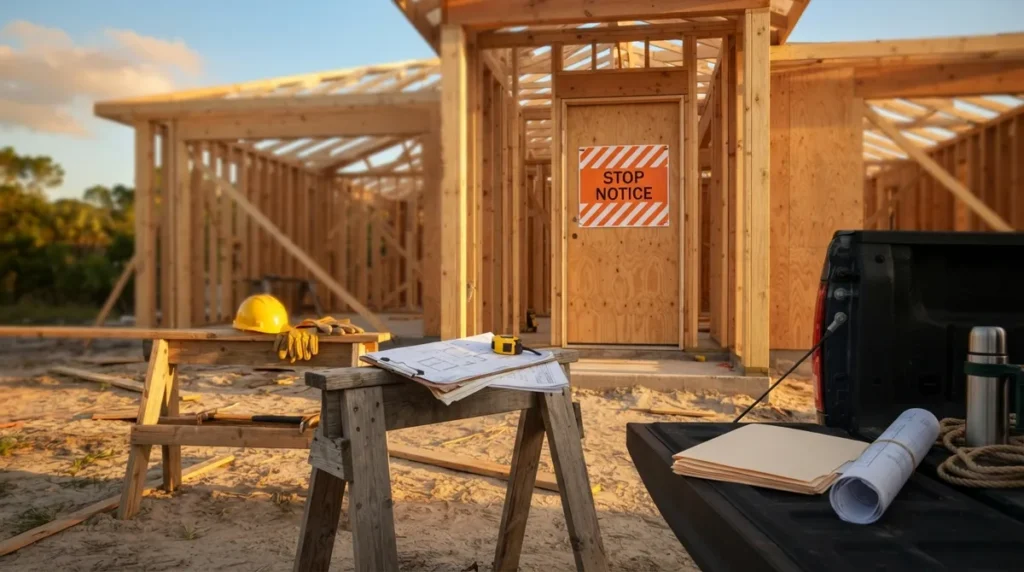
Key Takeaways
-
Stop all cited work immediately once a stop work order is served, since continuing can bring penalties and further enforcement that make the original problem harder and costlier to fix.
-
Only the issuing agency can lift a stop work order; filing a permit application, an appeal, or completing a fix does not by itself authorize you to resume work.
-
Read the written notice closely to identify the issuing agency, the cited violation, and the stated conditions for resuming, then call the assigned inspector to ask exactly what must be corrected.
-
Identify the root cause (missing permit, plan deviation, licensing, or safety issue) because each requires a different fix, such as a new permit, revised drawings, an engineer letter, or reinspection.
-
Get written confirmation from the building department before restarting work, and keep records of every submittal, correction, and inspection through final approval.
-
While the order is active, you may perform only work directed at correcting the violation or making the site safe, such as securing the structure against weather.
Few things make your stomach drop like seeing a bright notice taped to your door or job site that says STOP WORK. One minute your crew is framing, wiring, or roofing. The next, everything is on hold, the schedule is blown, and you are wondering what happens next. First, take a breath. You are far from the first person to get one, and there is a clear path forward.
This guide walks you through exactly how to get stop work order help in Florida, from reading the notice to getting cleared to resume. We wrote it for general contractors, solar companies, homeowners, realtors, and trade professionals alike. Along the way, you will learn what triggers these orders, what you should (and should not) do, and where a Florida permitting team can step in. Think of it as a friendly roadmap for a stressful moment.
What Is a Stop Work Order in Florida?
A stop work order (SWO) is a formal instruction from an authorized official telling you to halt some or all construction at a site. Under the Florida Building Code's administrative provisions, an order may be issued when regulated work violates code or is dangerous or unsafe. The order should state its reason and the conditions for resuming work.
In plain terms, someone with authority has decided the work needs to pause until a problem is fixed. That might be a missing permit, a safety hazard, or work that does not match approved plans.
Who Can Issue One?
Several parties may issue a stop work order, depending on the situation:
- Your local building department (city or county), which enforces the Florida Building Code and administers permits and inspections.
- Local code enforcement, which may act on violations tied to unpermitted or unsafe work.
- The state department that regulates contractor licensing, which can act on unlicensed work under Florida Statutes section 489.127.
Knowing who issued your order matters because that agency is the only one that can release it. Check the notice carefully for the agency name, the inspector's contact information, and the cited violation.
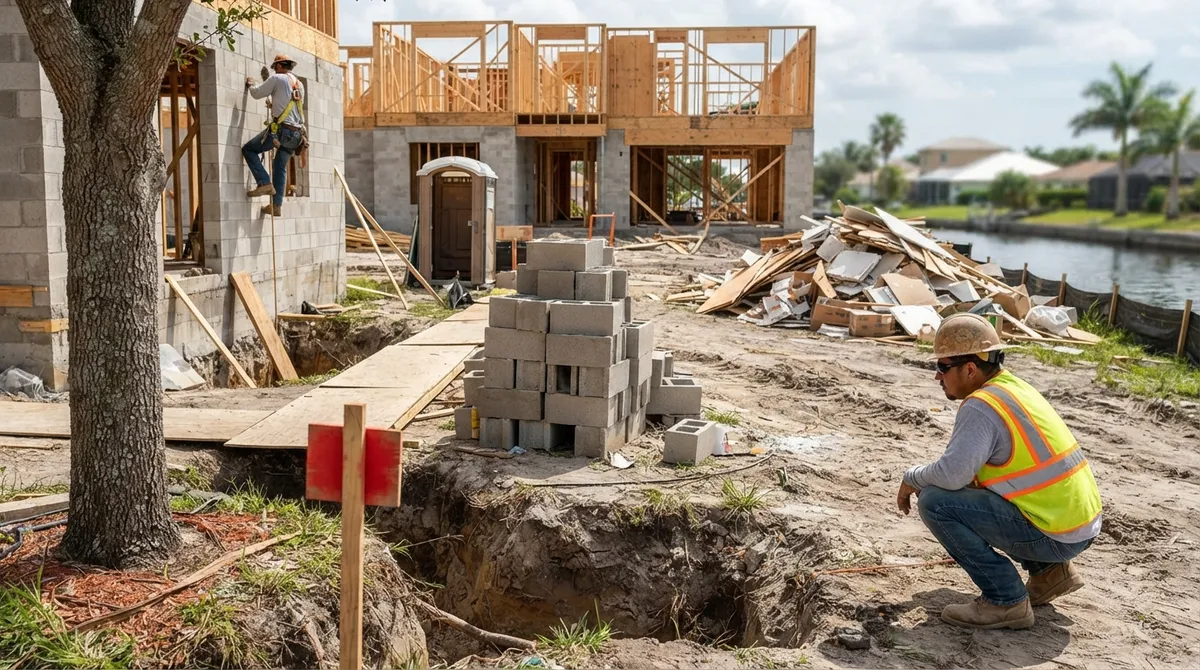
Common Reasons Florida Stop Work Orders Get Issued
Most stop work orders trace back to a handful of causes. Florida Statutes section 553.79 generally requires a permit before covered construction, alteration, repair, or demolition. When that step gets skipped or goes sideways, trouble can follow.
| Trigger | What It Means | Who It Often Affects |
|---|---|---|
| Work without an effective permit | No permit was pulled, or it expired or was closed | Homeowners, GCs, roofers |
| Work differs from approved plans | Field changes were made without a revision | GCs, design professionals |
| Code or safety violation | Inspector finds a dangerous or non-compliant condition | All project types |
| Unlicensed contractor | Work requiring a license was done without a valid credential | Homeowners, property investors |
| Failed or skipped inspections | Work was covered up before required inspection | GCs, solar and trade crews |
If your order involves permits that lapsed along the way, you may also be dealing with after-the-fact and expired permits, which is a very common companion issue.
How to Get Stop Work Order Help in Florida: Step by Step
Here is the practical sequence we recommend. Every jurisdiction has its own quirks, but these steps hold up almost everywhere in the state.
- Stop the cited work immediately. Once the order is served, the affected work must stop. Continuing can lead to penalties.
- Get the written order and read it closely. Note the issuing agency, the date, the cited work, the stated reason, and any conditions for resuming.
- Photograph the site and gather your paperwork. Collect permits, approved plans, inspection records, contracts, and contractor license numbers.
- Contact the issuing agency or assigned inspector. Ask, politely, exactly what must be corrected and what documentation they need.
- Identify the root problem. Is it a permit issue, a plan issue, a licensing issue, or a safety issue? Each has a different fix.
- Correct the issue and submit what is required. That could mean a new or revised permit, updated drawings, an engineer letter, or reinspection.
- Get written confirmation before restarting. Do not assume fixing the problem automatically lifts the order.
- Close out inspections and keep records. Track everything through final approval.
That last point deserves repeating: only the responsible authority can authorize you to resume. A permit application, an appeal, or even a completed correction does not by itself give you permission to pick up your tools again.
What You Can and Cannot Do While the Order Is Active
This is where people sometimes get into extra trouble, so let us make it simple.
Generally Okay
- Work that is specifically directed to correct the violation or remove an unsafe condition.
- Securing the site, protecting the structure from weather, and making safe what is unsafe.
- Talking with the building department, preparing documents, and applying for the right permits.
Generally Not Okay
- Continuing the cited work because "we are almost done."
- Resuming work because you filed an appeal or a permit application.
- Removing or ignoring the posted notice.
When in doubt, ask the inspector in writing what work is permitted. A short email now can save you a lot of headache later.
Do Not Assume Paperwork Fixes It Automatically
Here is a mistake we see often. A contractor submits a new permit application and assumes the order is gone. Or a homeowner fixes the visible problem and starts working again the next morning. Neither is a safe assumption.
Release typically follows some combination of required corrections, permit approval, and reinspection, confirmed by the issuing authority. Appeal rights, deadlines, and hearing procedures also vary by jurisdiction and by the type of order, so verify them directly with the agency or qualified legal counsel.
Also keep in mind that code editions and local amendments differ. The Florida Building Code includes administrative provisions on stop work orders, and your local department may apply its own procedures on top. Always confirm the currently adopted code and local process with your building department.
Where a Florida Permitting Service Can Help
You do not have to untangle this alone. A knowledgeable permitting team can take a big chunk of the burden off your plate. Here is what that help typically looks like:
- Reviewing the notice and your permit history to pinpoint the real issue.
- Coordinating with the building department so questions get answered quickly.
- Preparing or correcting permit applications and plan sets.
- Arranging sealed drawings, engineer letters, or as-built documentation when needed.
- Tracking submittals, comments, and reinspections through closeout.
To be clear and fair: no service can rescind an order on its own or guarantee approval. Only the responsible authority can do that. What a good permitting partner can do is make your path faster, cleaner, and less stressful.
At 1 Contractor Solutions, we act as Florida's outsourced permitting department. Our drafting and engineering are in house, and our own engineer signs and seals the work, so when a reviewer flags something, we fix it without waiting on an outside consultant. If you need fast help, our urgent permit rescue team handles denials, stop work orders, and closings held up by permit problems. You can also read our related walkthrough on stop work order after-the-fact help in Florida.
Matching the Fix to the Problem
Different triggers call for different solutions. This quick comparison can help you see where your situation fits.
| Root Problem | Typical Fix | Helpful Service |
|---|---|---|
| No permit pulled | Apply for a permit and legalize existing work | Permit facilitation and filing |
| Expired or closed permit | Reopen, renew, or reapply, plus inspections | After-the-fact and expired permits |
| Work differs from plans | Revised drawings and resubmittal | Revisions and resubmittals |
| Structural or safety concern | Engineer evaluation and sealed documentation | Structural engineering |
| Active code violation | Correct violation and document compliance | Code compliance and violations |
| Unlicensed work | Engage a properly licensed contractor and resolve licensing issues | DBPR licensee processes |
Tips for Each Type of Reader
General Contractors
Keep a clean paper trail of permits, approved plans, and inspection results on every job. If field changes happen, submit a revision before the work moves forward. It is far easier than backtracking after an order lands.
Solar Companies
Solar jobs depend on code-compliant structural and electrical documentation, and a lapse can stall an entire install schedule. Confirm permits are active before crews roll, and make sure inspections are scheduled on time. Our page for solar contractors explains how we support high-volume filings.
Homeowners and Residential Property Owners
If a contractor told you they would pull the permit and did not, you are not alone. Verify permits yourself using your local building department, and never feel shy about asking to see the permit card. Our homeowner resources can point you in the right direction.
Realtors and Buyers
A stop work order or open permit can derail a closing. Run a permit search early, and loop in a permitting pro before the clock gets tight. Our realtor and closing support is built for exactly that scenario.
Architects, Designers, and Specialty Trades
If your drawings are the sticking point, dependable outsourced drafting or MEP support can help you turn corrections quickly without growing in-house headcount.
Why Local Knowledge Matters
Florida has 67 counties and hundreds of municipalities, and each one runs its own show. Procedures, fees, and appeal timelines can look very different from one place to the next. A job near a city line may even fall under a different jurisdiction than you expect.
That is why starting with the right agency is so important. You can use a building department lookup to find the correct office, and an open permit search to see what is already on file for the property.
If your project is in a major market, our local pages may help too, including Hillsborough County, Broward County, and Miami-Dade County. For a region-specific example, see our guide on what to do after a stop work order in Broward.
What Happens If You Ignore a Stop Work Order?
Ignoring an order rarely ends well. Continuing cited work can lead to penalties, fines, and further enforcement, and it can make the original problem harder and more expensive to resolve. It may also complicate insurance claims, financing, and a future sale of the property.
The kinder, smarter path is the one you are already on: stop, learn exactly what the agency needs, fix it properly, and get written clearance. For more on the stakes, our article on the penalty for building without a permit in Florida goes deeper.
A Quick Pre-Call Checklist
Before you call the building department or a permitting pro, gather these items. It will make the conversation smoother and faster.
- A copy or clear photo of the stop work order.
- The property address and parcel or folio number.
- Any permit numbers, approved plans, and inspection records.
- Your contractor's name and license number, if applicable.
- A short description of what work was done and what remains.
- Photos of the current site condition.
Having this ready shows the agency you are organized and serious about fixing the problem, which can go a long way toward a cooperative tone.
Final Thoughts and Next Steps
A stop work order feels heavy in the moment, but it is a solvable problem. Stop the cited work, understand the order, correct the root issue, and get written release from the issuing authority before you restart. With the right documents and the right help, most projects get back on track.
If you would like a hand, we are here. We answer around the clock and respond within 30 minutes, day or night. You can get a free quote and tell us what is going on with your project. Curious what neighbors and clients say about us? Visit us on Google — 1 Contractor Solutions to read reviews, and feel free to follow us on LinkedIn or follow us on Facebook for more Florida permitting tips.
For official statutory language, you can review Florida Statutes section 553.79 directly. And remember: you do not have to figure this out alone.
FAQs
What should I do first after receiving a stop work order in Florida?
Stop the cited work right away, then get the written order and read it carefully. Note the issuing agency and the conditions for resuming, and contact the assigned inspector to ask exactly what needs to be corrected. A friendly, organized call early on can set a cooperative tone.
Can I keep working while I apply for a permit or appeal a stop work order?
Generally, no. Once an order is served, the cited work must stop, and filing a permit application or appeal does not by itself authorize you to continue. The only typical exception is work specifically directed to correct the violation or remove an unsafe condition.
How do I get a stop work order lifted in Florida?
You correct the underlying issue, such as obtaining the proper permit, revising plans, or fixing a code problem, and then get confirmation from the issuing authority. Release often follows permit approval and reinspection, and procedures vary by city and county. Only the agency that issued the order can release it.
Can a Florida permitting service help resolve a stop work order?
Yes, a permitting service can review your notice and permit history, coordinate with the building department, prepare or correct plans and applications, and track inspections through closeout. It cannot rescind an order or guarantee approval, since only the responsible authority can do that. Good support simply makes the process faster and less stressful.
What happens if I ignore a stop work order in Florida?
Continuing cited work can lead to penalties and further enforcement, and it often makes the original problem harder and costlier to fix. It can also complicate insurance, financing, and a future sale. Following the order and working with the agency is almost always the safer route.
We do this work every day across all 67 Florida counties. Call (866) 314-6931 and we will tell you what your situation actually requires — including when you do not need us.
Related services
Permit Facilitation & Filing
You have a crew scheduled, a client asking for dates, and a permit sitting somewhere in a queue you cannot see. We file it, w…
See the servicePlan Review Coordination
A permit in plan review is not one queue. On a commercial project it can be six queues, each with its own reviewer, its own c…
See the serviceReady to get your permit moving?
One call tells you which jurisdiction controls your project, what it will take, and what it will cost. Most of the time we can scope it on the phone.