
Blog
Unpermitted Work in Florida: An Investor's 2026 Playbook
Found unpermitted work on a Florida investment property? Learn how to check permit history, legalize it after the fact, and protect your deal.
Key Takeaways
-
Pull the property's full permit history from the city or county building department early, including open, expired, and void permits and any code-enforcement cases, before negotiating or walking away.
-
Unpermitted work (no permit ever issued) and open permits (inspections or final approval outstanding) require different fixes, so confirm which one you have before planning next steps.
-
After-the-fact permitting has no statewide procedure; each local building department sets its own documentation, inspection, and fee requirements, so get exact numbers directly from the local office.
-
Expect inspectors may require walls or finishes to be opened for concealed structural, electrical, plumbing, or mechanical work, so budget for exploratory openings and patching.
-
Florida sellers generally must disclose known material facts not readily observable under Johnson v. Davis, and an as-is sale does not by itself remove that duty or fix permit problems.
-
Build permit contingencies and inspection contingencies into your purchase contract and price in likely repair, engineering, and delay costs before signing.
You found the perfect deal. The numbers pencil out, the neighborhood is trending up, and then the inspection report lands: a converted garage with no permit on file, a patio enclosure nobody can document, maybe a roof that was replaced "by a guy." Welcome to one of the most common surprises in investor unpermitted work Florida deals.
Take a breath. This is fixable far more often than most people expect. Florida investors run into unpermitted work all the time, whether they are buying a flip, a rental, or a long-term hold. The difference between a deal that stalls and a deal that closes usually comes down to knowing the right steps, in the right order.
In this guide, we will walk through how to spot unpermitted work, how to tell it apart from an open permit, how after-the-fact permitting generally works, what it may cost you in time and money, and what Florida's disclosure rules mean for buyers and sellers. We will keep it friendly and practical, because you have enough stress on your plate already.
Why Unpermitted Work Is a Big Deal for Florida Investors
Florida Statutes §553.79 generally requires a permit before covered construction, alteration, repair, or demolition begins. The local enforcing agency, usually a city or county building department, decides what a given project needs and performs the inspections. That means the rules feel statewide on paper but play out locally in real life.
For investors, unpermitted work creates several headaches at once:
- Financing and appraisal friction: Lenders and appraisers may question unpermitted square footage or systems.
- Insurance questions: Unverified work can complicate claims, so it pays to understand how expired and unpermitted work interacts with insurance claims in Florida.
- Resale delays: Buyers, title companies, and their lenders may flag permit issues late in the process.
- Safety and liability: Concealed electrical, plumbing, or structural work may never have been inspected.
- Enforcement exposure: A code-enforcement case can attach to the property and follow it through a sale.
The good news? Most of these problems shrink dramatically once the work is documented, inspected, and closed out properly.
Unpermitted Work vs. Open Permit: Know Which One You Have
This distinction trips up even seasoned investors, and it changes your game plan completely.
| Situation | What It Means | Typical Next Step |
|---|---|---|
| Unpermitted work | Work was done and no permit was ever issued | Apply through the local after-the-fact process, or correct or remove the work |
| Open permit | A permit exists but required inspections or final approval are still outstanding | Work with the building department to complete inspections and close it out |
| Expired permit | A permit was issued but lapsed before completion | Ask the jurisdiction about reinstatement, renewal, or a new application |
If you suspect an open permit, our guide on what to do when an open permit is found at closing is a great starting point. If the permit lapsed, see how to close an expired permit in Florida.
Step 1: Research the Property's Permit History
Before you negotiate, renegotiate, or walk away, find out what the record actually shows. A permit-history search with the city or county building department is a practical first move. You can also use the open permit search tool and the building department lookup to find the right office.
One honest caveat: records are not the whole story. A clean permit history does not prove that concealed work complies with code, and a missing permit does not always mean nobody did the work legally decades ago. Think of the permit search as a strong clue, not a final verdict.
When you pull records, ask for:
- All issued permits, with their status (final, open, expired, or void).
- Any code-enforcement cases, past or pending.
- Prior notices of violation or stop-work orders.
- Certificate of occupancy or certificate of completion records.
Also confirm which jurisdiction actually controls the parcel. Near city lines, that is not always obvious, and the wrong office will send you in circles. Our article on which Florida jurisdiction reviews your project can save you time.
Step 2: Understand How After-the-Fact Permitting Works
Many Florida jurisdictions have a way to permit work after it has been built. There is no single statewide procedure and no guaranteed approval. Each local building department decides the application requirements, documentation, inspections, fees, and corrections.
Generally speaking, an after-the-fact review may involve:
- An application describing the existing work.
- Plans or as-built drawings showing what was actually built.
- Contractor records, receipts, and photographs, if available.
- Engineering documentation for structural, electrical, or mechanical elements.
- Access to concealed work so inspectors can verify it.
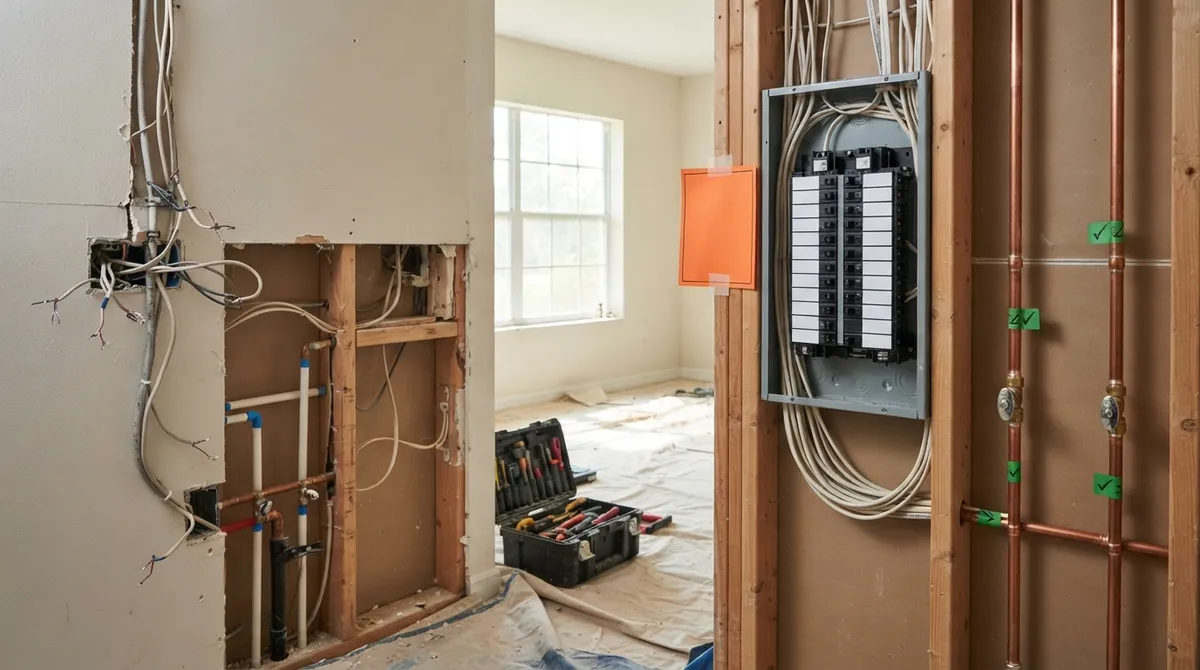
That last point matters. Inspectors may require walls, ceilings, or finishes to be opened so structural, electrical, plumbing, or mechanical work can be examined. An as-built certificate is not necessarily a substitute for required inspections. Plan on some exploratory opening and patching in your budget.
For a deeper dive, see our overview of after-the-fact and expired permit services and this walkthrough on how to legalize unpermitted work in Florida.
Step 3: Gather the Right Documents
Strong submittals move faster. Weak ones bounce back with correction notices. For investors juggling several properties, a tidy package is the difference between weeks and months.
| Document | Why It Helps | |
|---|---|---|
| As-built drawings | Shows the building department what actually exists today | |
| Site plan or survey | Confirms setbacks, lot coverage, and placement | |
| Engineer letter or sealed drawings | Verifies structural or system compliance where required | |
| Photos and prior records | Documents conditions and construction details | |
| Product approvals | Supports items like windows, doors, and roofing |
If you need drawings that reflect reality, as-built drawing services are usually the first purchase. When a reviewer wants an expert to confirm structural adequacy, an engineer letter or full structural engineering package can bridge the gap.
What If the Work Fails Inspection?
It happens, and it is not the end of the world. If work fails inspection or does not meet applicable requirements, the owner may need to correct it, expose additional work for inspection, or remove it.
That is why smart investors budget before they buy. Set aside money and time for:
- Investigation and exploratory openings.
- Design, drawings, and engineering.
- Permit fees and any additional review fees.
- Repairs, upgrades, or partial removal.
- Schedule delays while corrections are reviewed.
We cannot give you a reliable statewide average for after-the-fact fees or timelines, because they vary widely by jurisdiction and project. Your best number comes straight from the local building department, or from a permitting team that files there regularly. For a rough framework, read about after-the-fact permit costs in Florida.
Florida Disclosure Rules Every Investor Should Know
Disclosure matters on both sides of the deal. Under the rule associated with Johnson v. Davis, Florida sellers generally must disclose known facts that materially affect a property's value and are not readily observable to the buyer. Known unpermitted work can fall into that category.
A few friendly reminders:
- An "as-is" sale does not by itself eliminate disclosure duties or fix the permit issue.
- If you are buying, put permit review and inspection contingencies in your contract.
- If you are selling, resolving the issue before listing often beats negotiating a discount later.
- Always get transaction-specific advice from a Florida real estate attorney.
There is also the code-enforcement angle. Florida Statutes §162.06(2) addresses notice duties when a property is subject to a pending code-enforcement proceeding, and it includes a five-day post-transfer notice requirement in that context. Confirm the current text, deadlines, and applicability with the local enforcement agency or your attorney before closing.
If you already received a notice, our article on what to do after a Florida code enforcement notice can help you respond calmly and quickly.
Can You Close With Unpermitted Work?
Sometimes, yes. Whether a deal closes depends on the lender, the title company, the buyer, and the local jurisdiction. Some cash investors close and permit afterward. Others negotiate credits, escrows, or price reductions. Lenders can be pickier.
Here is a quick comparison of common paths:
| Path | Best For | Watch Out For |
|---|---|---|
| Permit before closing | Sellers who want a clean sale | Timeline may push the closing date |
| Close, then permit | Cash buyers comfortable with risk | You inherit the problem, costs, and any enforcement case |
| Negotiate a credit or escrow | Deals with unclear repair scope | Estimates can miss concealed conditions |
| Walk away | Deals where cost and risk exceed margin | Lost deposit if contingencies were waived |
If a transaction is on the clock, our realtor and closing support and urgent permit rescue services are built for exactly this situation. You may also like this read on how a permit hold can delay a Florida closing.
Smart Due Diligence Before You Buy
The cheapest unpermitted-work fix is the one you price in before you sign. Build this checklist into every acquisition:
- Order a permit-history review for every addition, conversion, roof, window, and system upgrade you can see.
- Compare the listed square footage and bedroom count to what permits actually show.
- Hire an inspector who looks for signs of unpermitted work, such as mismatched finishes, panel upgrades, and enclosed patios.
- Get a scope and cost opinion from a permitting professional.
- Negotiate based on real numbers, not guesses.
Properties with long histories, flips, and former rentals tend to hide the most surprises. If you inherit work from a previous owner, you are not alone; see what to do if a prior owner skipped permits.
Other Approvals You Might Overlook
A building permit is only one piece. Depending on the project, you may also need zoning approval, fire review, floodplain compliance, or environmental sign-off. Coastal and low-lying properties can add extra layers, so read up on the FEMA 50 percent rule in Florida before you plan large renovations on legalized structures.
For roofs, windows, and doors, product approvals can be a sticking point. Our posts on Miami-Dade NOA versus Florida product approval explain the difference in plain English.
How 1 Contractor Solutions Can Help Investors
Investors need speed and clarity, not paperwork puzzles. 1 Contractor Solutions acts as Florida's outsourced permitting department, working across all 67 counties. We research the permit history, identify which jurisdiction controls the property, prepare as-built drawings and sealed engineering with our in-house team, file the application, track reviewer comments, and carry the project through inspections and closeout.
We respond within 30 minutes, day or night, and we handle the files other people decline. If you want to see how clients feel about working with us, visit us on Google — 1 Contractor Solutions and read the reviews. You can also follow us on LinkedIn or follow us on Facebook for Florida permitting updates.
Planning a deal in a specific area? We regularly work in places like Hillsborough County, Miami-Dade County, and Orange County, and we know each office's habits.
Conclusion: Turn a Problem Property Into a Plan
Unpermitted work does not have to sink your investment. Verify the permit history, know whether you are dealing with an unpermitted structure or an open permit, budget for investigation and correction, understand Florida's disclosure expectations, and bring in help early. Every jurisdiction does things its own way, so confirm requirements directly with the local building department.
Ready to move forward with confidence? Get a free quote and let our team tell you exactly what it will take to legalize your property and keep your deal on track.
FAQs
How can a Florida real estate investor check a property's permit history?
Start with a permit-history search through the city or county building department that controls the property. You can also use an open permit search tool to spot open or expired permits. Keep in mind that records may not show whether concealed work complies with code, so an inspection or professional review is a smart follow-up.
Can unpermitted work in Florida be permitted after the fact?
Often it can, but there is no single statewide procedure and no guaranteed approval. The local building department decides the application, documentation, inspection, and fee requirements. Expect to provide as-built drawings, and possibly engineering and access to concealed work.
Does a Florida seller have to disclose known unpermitted work?
Generally, Florida sellers must disclose known facts that materially affect a property's value and are not readily observable, under the rule associated with Johnson v. Davis. Selling as-is does not by itself remove those duties or fix the permit problem. Talk with a Florida real estate attorney about your specific transaction.
What happens if unpermitted work fails inspection?
The owner may need to correct the work, expose more of it for inspection, or remove it entirely. That is why investors should budget for investigation, design, repairs, permit fees, and schedule delays before buying or renovating.
What is the difference between unpermitted work and an open permit?
Unpermitted work means no permit was ever issued for the work. An open permit means a permit exists, but required inspections or final approval are still outstanding. Each calls for a different fix, so confirm which one you have with the building department.
We do this work every day across all 67 Florida counties. Call (866) 314-6931 and we will tell you what your situation actually requires — including when you do not need us.
Related services
Permit Facilitation & Filing
You have a crew scheduled, a client asking for dates, and a permit sitting somewhere in a queue you cannot see. We file it, w…
See the servicePlan Review Coordination
A permit in plan review is not one queue. On a commercial project it can be six queues, each with its own reviewer, its own c…
See the serviceReady to get your permit moving?
One call tells you which jurisdiction controls your project, what it will take, and what it will cost. Most of the time we can scope it on the phone.